14 posts tagged with "solana"

View All Tags

Raydium LaunchLab's Fee Stack Is Turning Solana Token Launches Into a Higher Hurdle Race

· 7 min read
DeFi Educator and Strategist

Most coverage of Solana launchpads still treats fees like side details.

That framing is obsolete.

As of April 5, 2026, Raydium's LaunchLab documentation and related analytics make the more important point hard to ignore: launching and trading a new token on Solana is increasingly an additive fee stack, not a simple AMM event.

The reason this matters is not just that traders pay more. The deeper market-structure consequence is that by the time a token graduates into a live liquidity pool, the market may already be carrying a larger hidden cost basis than many LPs and traders realize.

That changes what post-migration liquidity has to do in order to feel healthy.

Drift's Exploit Shows How a Perp DEX Can Lose Its Liquidity Premium Before It Loses Relevance

· 7 min read
DeFi Educator and Strategist

Most DeFi exploit coverage focuses on the stolen number. That is understandable, and usually incomplete.

The April 1, 2026 exploit at Drift is obviously a balance-sheet event. But for anyone who cares about liquidity provisioning, execution quality, or DeFi market structure, the more important story is that a venue can remain operational and still lose the invisible premium that made traders trust it in the first place.

By April 3, the follow-up coverage was still accelerating. Cointelegraph reported that Drift had started sending onchain messages to wallets tied to the attacker, while external investigators were estimating losses in the $280 million to $286 million range and pointing to a staged operation involving durable nonces and signer compromise rather than a plain smart-contract bug (Cointelegraph, April 3, 2026). That matters because it changes what should be repriced.

If the exploit had come from a simple isolated contract bug, the market could tell itself a cleaner story: patch the code, replenish funds, move on. But a compromise tied to governance or multisig process is different. It attacks the coordination layer around the venue, not just a single piece of code.

That is why I think the real post-Drift story is not "one more hack."

It is that trust in a derivatives venue is itself a liquidity input, and when that input gets impaired, the cost shows up long before the app necessarily stops processing trades.

Orca's New Autoswap Pushes Whirlpools Closer to an LP Service

· 5 min read
DeFi Educator and Strategist

Orca's current Autoswap documentation shows a meaningful product shift. Autoswap no longer feels like a small convenience feature for topping up a position. It now pulls competitive quotes from multiple supported aggregators, lets the LP choose which one to use, bundles the swap and deposit into a single flow, and falls back to a backup route if one option is unavailable.

That matters because it pushes Orca further away from the old "DEX screen plus LP tab" model and closer to something more valuable: an LP service layer built around Whirlpool positions.

DEX Volumes on SOL vs ETH (March 13, 2026): Yes, We Should Still Be Providing Liquidity

· 5 min read
DeFi Educator and Strategist

If you want to know whether liquidity provision still makes sense in March 2026, the first question is simple: is real trading flow still there?

As of March 13, 2026, the answer is clearly yes. DEX traders are still moving billions of dollars a day across Solana, Ethereum, Base, BSC, and Arbitrum. That does not mean every pool is worth touching, but it does mean the raw material for LP returns, swap volume, is absolutely still present.

Meteora Co-Founder Accused of 15 Token Scams: The Technical Side of a $100M Fraud

· 9 min read
DeFi Educator and Strategist

The story of the TRUMP, MELANIA, and LIBRA memecoins just got much darker. According to a lawsuit and blockchain analysis, Benjamin Chow, co-founder of Meteora DEX on Solana, has been accused of being the mastermind behind a scheme involving 15 different token scams that generated over $100 million in profits for insiders while retail investors lost billions.

This isn't just another meme coin rug pull-it's a sophisticated technical fraud that exploited the very infrastructure that was supposed to enable decentralized trading.

Why Orca's Transparent Fees Beat Jupiter's Hidden Costs

· 7 min read
DeFi Educator and Strategist

When you swap SOL, USDC, or mSOL on Orca, you know exactly what you're paying. The fee structure is transparent, predictable, and fair-especially for the common trades that most users make every day. Orca's fee settings have never been an issue for these standard pairs.

Meanwhile, aggregators like Jupiter (jup.ag) have been layering hidden fees, integrator cuts, and priority tips on top of swaps, making the effective cost to users orders of magnitude higher than Solana's minuscule base fees. Let's break down why Orca's approach is better-and why Jupiter's fee mechanics are ripping people off.

Orca Trading Fee Configuration

The TRUMP Memecoin Strategy: A Masterclass in Financial Engineering

· 10 min read
DeFi Educator and Strategist

The launch of the TRUMP memecoin on January 17, 2025, wasn't just another meme token drop. It was a brilliantly executed financial strategy that generated nearly $100 million in trading fees in just two weeks-while small traders collectively lost over $2 billion. Here's how they did it, and why it's a masterclass in value extraction.

Monopoly Money and TRUMP Token

DeepWiki: AI-Powered Documentation for DeFi Protocols Like Orca Whirlpools

· 11 min read
DeFi Educator and Strategist

If you're providing liquidity on protocols like Orca, you're essentially trusting smart contracts with your money. But how do you actually know what those contracts are doing? Most of us aren't programmers, and even if we were, diving into a massive codebase with thousands of files written in Rust and TypeScript is overwhelming.

That's where DeepWiki comes in. It's a tool from Cognition AI that automatically reads through GitHub repositories and creates documentation that normal people can actually understand. Instead of staring at code wondering what it does, you get a wiki-style guide with explanations, diagrams, and even a chat feature where you can ask questions.

Think of it like having a technical writer who's read every line of code and can explain it to you in plain English. DeepWiki scans the repository, figures out how everything connects, and presents it in a way that makes sense. You can ask questions like "How does fee accumulation work?" and get answers that point directly to the relevant code, so you can verify what you're being told.

Orca xORCA Staking: Attractive Yields When ORCA is Priced Right

· 6 min read
DeFi Educator and Strategist

Orca's xORCA staking offers a unique way to earn yield on your ORCA tokens by aligning your interests with the protocol's success. Unlike traditional staking that locks your tokens, xORCA is a liquid staking token that grows in value over time as the protocol buys back ORCA with trading fees.

Here's what makes xORCA staking attractive - and why buying ORCA at reasonable prices can significantly boost your effective yield.

xORCA Staking Metrics - January 2026

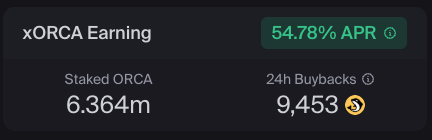
As of January 2026, xORCA staking is showing impressive yields exceeding 50% APR, with over 6.3 million ORCA staked and significant daily buybacks driving the exchange rate growth.

What is the Optimal SOL/USDC Concentrated Liquidity Price Range?

· 9 min read
DeFi Educator and Strategist

One of the most common questions we get from liquidity providers is: "What price range should I use for my SOL/USDC concentrated liquidity position?"

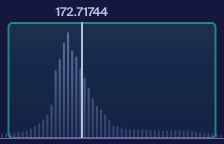
The answer isn't simple-it depends on your risk tolerance, time horizon, and market outlook. But by analyzing historical price action, technical levels, and practical LP strategies, we can identify ranges that work for different types of liquidity providers.