Wide-to-Narrow Strategy: Orca Fees → Meteora High Volume
The Wide-to-Narrow Strategy is an advanced liquidity provision approach that combines the best of both worlds: passive wide-range positions on Orca (no rent costs) with active narrow-range positions on Meteora (higher volume, dynamic fees). This strategy builds on the LP Flywheel by systematically redeploying fees from low-maintenance positions into high-yield opportunities.
🎯 The Core Concept
The Problem:
- Orca: Great for wide ranges ($120-$280 for SOL/USDC) with no rent costs, but volume can be lower
- Meteora: Higher volume and dynamic fees, but wide ranges cost significant SOL in rent - making passive wide positions impractical
The Solution:
- Start Wide on Orca: Open a wide-range position (e.g., SOL/USDC $130-$280) that requires minimal maintenance
- Earn Fees: Let the position accumulate fees over weeks/months
- Harvest & Deploy Narrow on Meteora: Use accumulated fees to open narrow, high-volume positions on Meteora where rent costs are manageable
This strategy leverages each protocol's strengths while avoiding their weaknesses.
📊 Why This Works: Volume Comparison
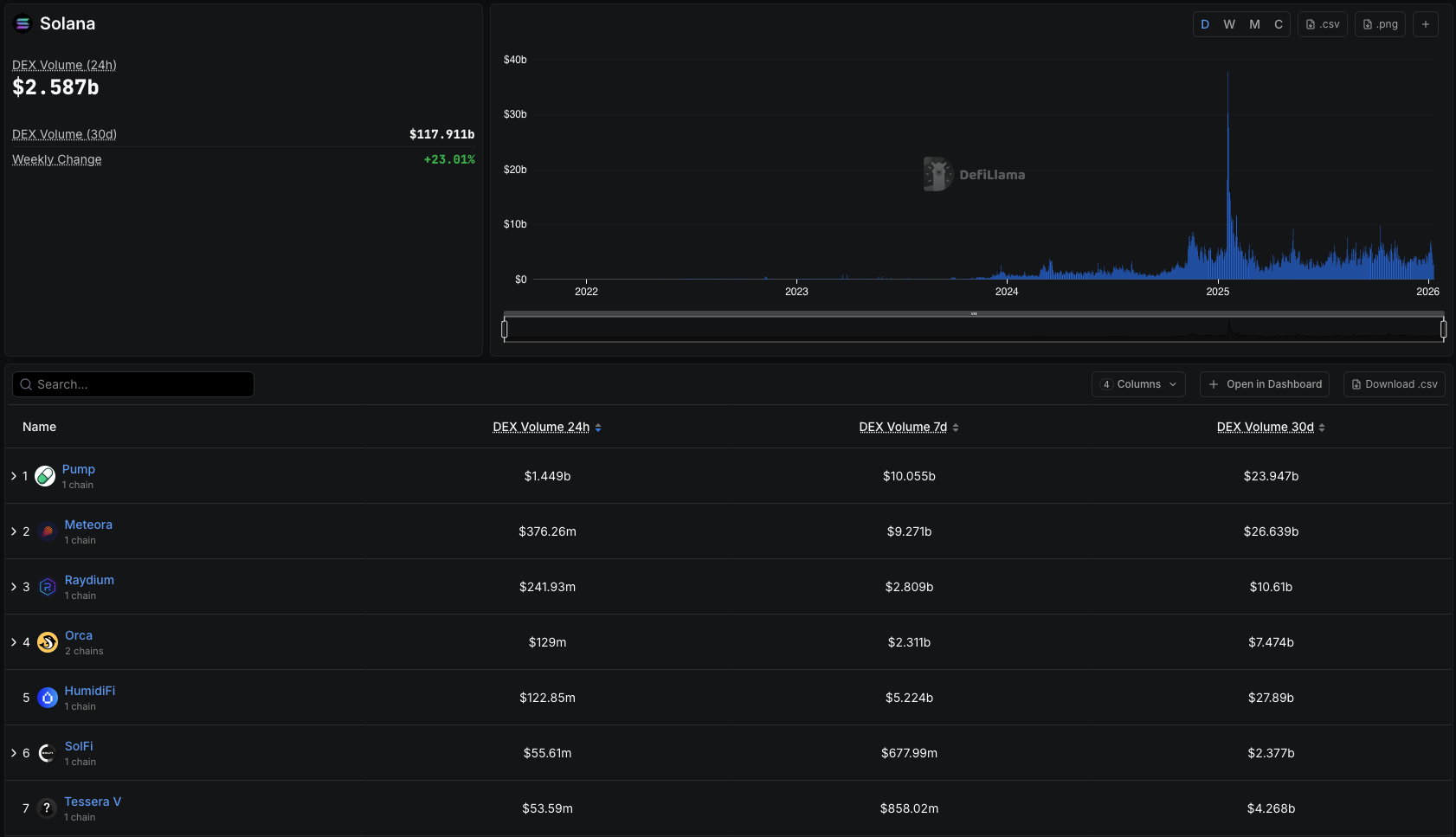
As shown in the Solana DEX volume data, Meteora consistently processes significantly more volume than Orca:
- Meteora: $376M+ in 24h volume, $9.2B+ in 7-day volume
- Orca: $129M in 24h volume, $2.3B in 7-day volume
Higher volume = more trading fees for LPs. However, Meteora's rent structure makes wide positions expensive, while Orca allows wide positions with no additional rent beyond initial setup.
🏗️ How It Works: Step-by-Step
Phase 1: Build Your Base on Orca
Goal: Establish a passive income stream with minimal rent costs
-
Choose a Wide Range: For SOL/USDC, a range like $130-$280 works well for passive strategies
- This range covers most of SOL's typical trading range over 1+ years
- See our Orca guide for range selection tips
- See our optimal SOL/USDC range analysis for detailed price history
-
Deposit Liquidity: Add SOL and USDC to your Orca Whirlpool position
- Orca charges minimal rent (~0.07-0.14 SOL for first-time tick arrays, refundable)
- No ongoing rent costs for range width
-
Let It Run: Monitor occasionally, but don't stress about daily rebalancing
- Wide ranges reduce the risk of going out of range
- Fees accumulate automatically in your position
Expected Yield: ~20-25% APR on average for wide SOL/USDC ranges (varies with market conditions)
Phase 2: Harvest Fees and Deploy on Meteora
Goal: Convert accumulated fees into high-volume, narrow positions
-
Claim Fees from Orca: Withdraw accumulated fees from your Orca position
- Fees are automatically added to your position value
- You can withdraw fees by partially withdrawing liquidity
-
Choose Narrow Range on Meteora: Select a tight range around current price
- Example: If SOL is at $150, choose $145-$155 (narrow range)
- Narrow ranges on Meteora have manageable rent costs (unlike wide ranges)
- See our Meteora guide for detailed setup instructions
-
Understand Bin Step: This is critical for Meteora strategy
- Bin Step = The price difference between consecutive bins (price points)
- Smaller bin step = More bins per dollar = More volume capture, but smaller max range
- Larger bin step = Fewer bins per dollar = Less volume, but wider max range possible
- For narrow ranges, you can use smaller bin steps to maximize fee capture
- See Meteora's bin step documentation for details
-
Deposit on Meteora: Use your harvested fees to open the narrow position
- Rent costs for narrow ranges are reasonable (typically 0.1-0.5 SOL)
- Dynamic fees mean you earn more during volatile periods
Expected Yield: 30-100%+ APR on narrow ranges during high-volume periods (varies significantly with volatility and volume)
🔧 Understanding Bin Step on Meteora
Bin Step is a fundamental concept for Meteora DLMM that directly impacts your strategy:
What is Bin Step?
Each bin represents a single price point, and bin step is the difference between two consecutive bins. Bin steps are calculated based on basis points set by the pool creator.
Example: If SOL/USDC is $150 and bin step is 25 basis points (0.25%):
- Bin 1: $150.00
- Bin 2: $150.00 × 1.0025 = $150.38
- Bin 3: $150.38 × 1.0025 = $150.75
- And so on...
How Bin Step Affects Your Strategy
| Bin Step Size | Volume Capture | Max Range | Best For |
|---|---|---|---|
| Smaller (e.g., 1-10 bps) | Higher (more continuous price range) | Smaller (limited bins per position) | Narrow ranges, stable pairs |
| Larger (e.g., 25-100+ bps) | Lower (less continuous) | Larger (more bins per position) | Wide ranges, volatile pairs |
For the Wide-to-Narrow Strategy:
- On Orca (Phase 1): You don't need to worry about bin steps - Orca uses ticks, not bins
- On Meteora (Phase 2): Choose pools with smaller bin steps for narrow ranges
- Smaller bin steps = more bins in your narrow range = better volume capture
- Since you're using narrow ranges anyway, you can maximize volume with smaller bin steps
- The max # of bins per position is 1,400, so with smaller bin steps, you can still cover a meaningful price range
Key Insight: For narrow, high-volume positions, smaller bin steps are your friend. They allow you to capture more trading volume while keeping rent costs reasonable (since you're using a narrow range).
💰 Real-World Example
Scenario: You have $10,000 to deploy
Month 1-3: Build Base on Orca
- Deposit: $10,000 in SOL/USDC on Orca
- Range: $130-$280 (wide, passive)
- Rent Cost: ~0.1 SOL (one-time, mostly refundable)
- Fees Earned: ~$500-625 over 3 months (assuming 20-25% APR)
- Maintenance: Minimal - check monthly
Month 4: Harvest & Deploy on Meteora
- Harvest: $500 in fees from Orca position
- Deploy on Meteora: $500 in narrow SOL/USDC position
- Range: $145-$155 (narrow, around current price of $150)
- Bin Step: Choose pool with smaller bin step (e.g., 5-10 bps) for better volume capture
- Rent Cost: ~0.2 SOL (reasonable for narrow range)
- Expected Yield: 40-80% APR during high-volume periods
Ongoing Strategy
- Orca Position: Continues earning ~20-25% APR passively
- Meteora Position: Requires more monitoring (narrow range), but earns higher yields
- Reinvest: As Meteora position earns fees, you can:
- Add to existing Meteora position
- Open additional narrow positions
- Reinvest back into Orca for more passive income
- Take profits
⚖️ Trade-offs & Considerations
Advantages
Best of Both Worlds: Passive income from Orca + high yields from Meteora
Capital Efficiency: Wide Orca position doesn't tie up capital for rent
Volume Capture: Meteora's higher volume means more fees
Dynamic Fees: Meteora's dynamic fee system rewards volatility
Flexibility: Can adjust strategy based on market conditions
Disadvantages
❌ Active Management: Meteora narrow positions require monitoring
❌ Rent Costs: Even narrow Meteora positions cost SOL in rent
❌ Out-of-Range Risk: Narrow positions can go out of range quickly
❌ Complexity: Managing positions on two protocols adds complexity
❌ Gas Costs: More transactions = more SOL spent (though minimal on Solana)
When to Use This Strategy
Good for:
- LPs who want passive income but are willing to actively manage high-yield positions
- Those comfortable with Solana's low fees enabling frequent rebalancing
- LPs who understand both Orca and Meteora mechanics
- Strategies where you want to compound fees into higher-yield opportunities
Not ideal for:
- Completely passive LPs who don't want to monitor positions
- Those uncomfortable with managing multiple protocols
- Very small capital amounts (rent costs become proportionally larger)
- LPs who prefer simplicity over optimization
🔗 Related Resources
- LP Flywheel Strategy: The foundational strategy this builds upon
- Orca Whirlpools Guide: Complete guide to Orca's concentrated liquidity
- Meteora DLMM Guide: Detailed Meteora setup and strategies
- Optimal SOL/USDC Range Analysis: Price history and range selection for SOL/USDC
- Orca Billion Dollar Volume Post: Context on Orca's volume and growth
- Meteora Bin Step Documentation: Official Meteora docs on bin steps
📝 Summary
The Wide-to-Narrow Strategy is a sophisticated approach that:
- Starts with passive wide positions on Orca - No rent costs, minimal maintenance, steady income
- Harvests fees systematically - Builds a capital base from passive income
- Deploys narrow positions on Meteora - Captures high volume with dynamic fees, manageable rent costs
- Leverages bin step selection - Uses smaller bin steps for narrow ranges to maximize volume capture
This strategy requires active management of Meteora positions but rewards you with higher yields while maintaining a passive income stream from Orca. It's perfect for LPs who want to optimize their capital efficiency across Solana's top DEXes.
Remember: Always do your own research, understand the risks (impermanent loss, smart contract risk, out-of-range positions), and start with smaller positions to learn the mechanics before scaling up.